How meteor showers form and get their constellation names
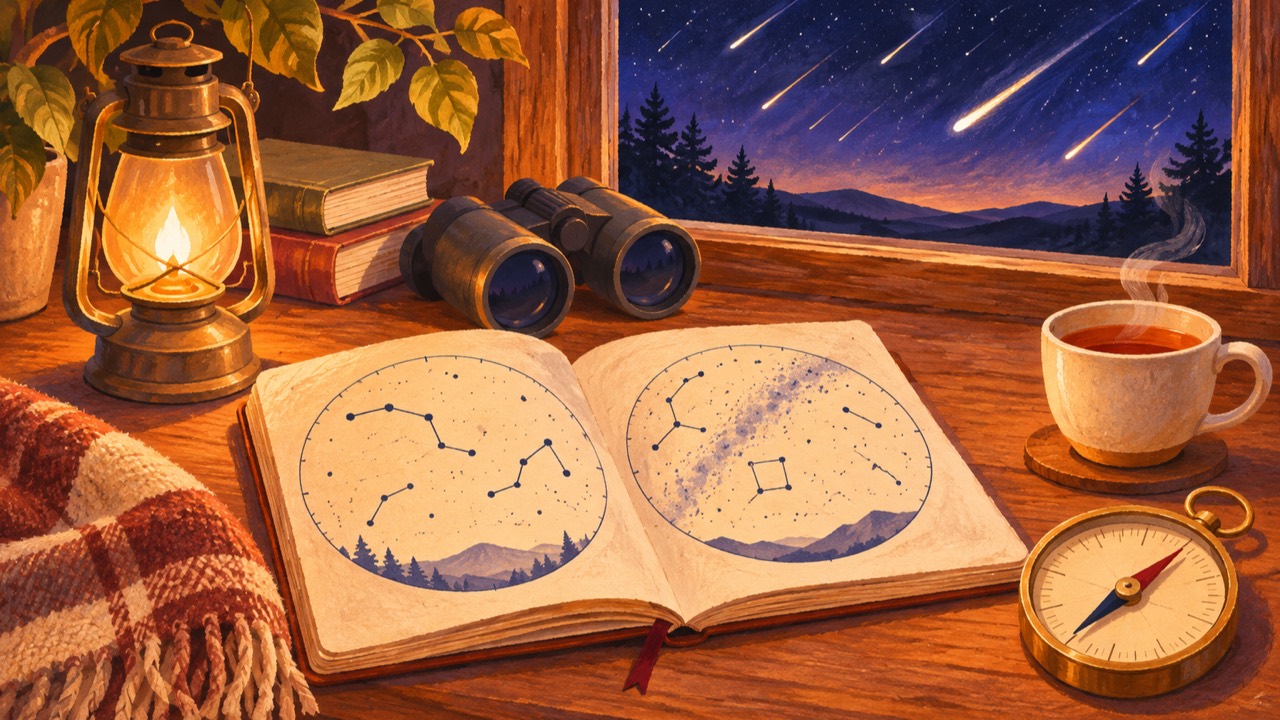
Meteor showers happen when Earth passes through debris from comets or asteroids. Their constellation names refer to an apparent radiant, not the debris’ distant birthplace.
1. Start with the debris
NASA explains that comets and asteroids leave rocky fragments and dust along their orbits; Earth’s passage through those trails produces meteor showers.
2. Understand the yearly pattern
Earth passes through the same trails at roughly the same time each year, producing recurring annual showers.
3. Read the radiant correctly
For the Geminids, the apparent point of origin lies in Gemini. NASA emphasizes that the constellation is not the source of the meteors.
4. Know the asteroid exception
Most meteor showers are linked to comets, but the parent body of the Geminids is the asteroid 3200 Phaethon, so not every meteor shower comes from a comet.
5. Look beyond the radiant
NASA advises looking beyond Gemini because Geminids are visible across the sky. The name helps identify the shower, not restrict where to look.
Sources: science.nasa.gov/skywatching/ · science.nasa.gov/solar-system/meteors-meteorites/geminids/ · apps.apple.com/tw/app/nightvane-star-guide/id6826494660
 Nightvane