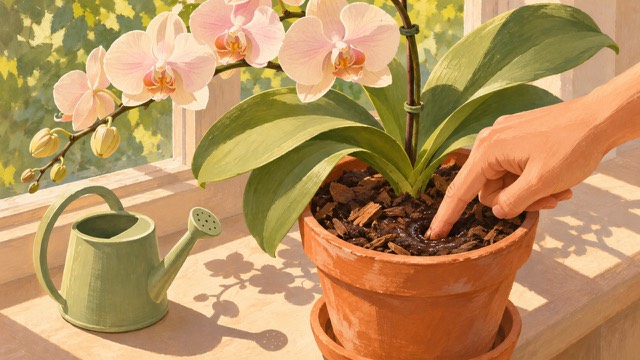
Yellow plant leaves: check water, light, and roots first
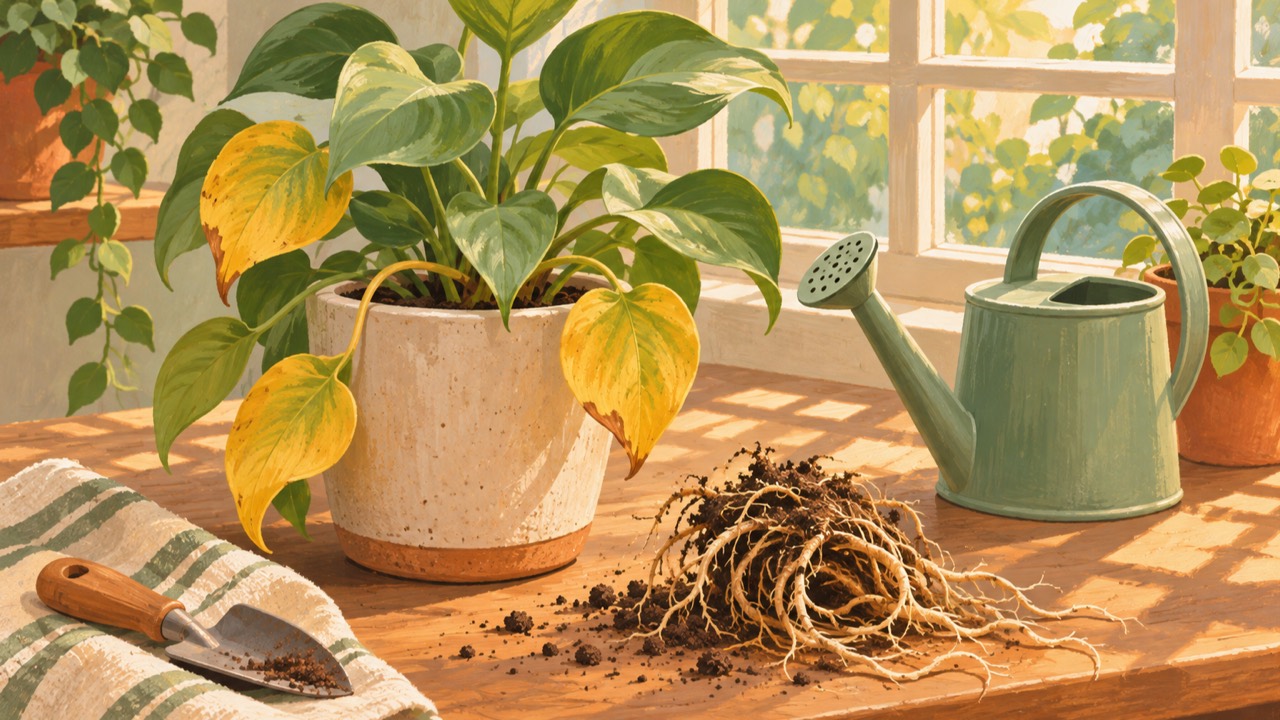
Yellowing does not automatically mean a nutrient deficiency. Review watering, light, roots, and recent changes before adding water or fertilizer.
1. Locate the change
The agriculture guidance starts with the affected plant parts, distribution, and recent environmental changes. Note which plant and leaves changed.
2. Review watering and drainage
Too much moisture can starve roots of oxygen; empty water from the saucer in time so the pot bottom does not sit in water for long. Yellow leaves do not always mean the plant needs more water.
3. Review light exposure
Low light can cause pale growth, while sudden strong light can scorch shade-adapted plants. Review recent moves and light changes.
4. Avoid reflexively adding fertilizer
Root problems can also cause yellowing. Excess fertilizer may damage roots; use it according to plant needs and the product label.
5. Look at the whole pattern
Check for wilting, scorching, spots, and pests too. Similar leaf colors can have different causes, so consider several conditions together.
Sources: kmweb.moa.gov.tw/subject/subject.php?id=65732&print=Y · apps.apple.com/us/app/zairi-plant-watering-reminder/id6816606160
 ZaiRi